 by
by A school lesson may be logical and well-structured, yet still difficult to grasp. A teacher may talk about atmospheric pressure or electricity, while pupils hear little more than a string of technical terms. The problem is not that theory is unnecessary. If theory is not accompanied by observation, practice, and analysis, it simply remains in pupils’ notes and does not stick in their minds.
Hands-on learning offers a practical way to address this problem. Textbooks are not being pushed aside, and formulas are not being replaced by demonstrations. Instead, the point is for pupils to see how knowledge works: why a ball changes its trajectory and why a paper bridge can support an unexpectedly heavy load.
Research confirms that active learning improves average exam results by around 6%. For schools, this is an important signal: a child understands the material better when they listen, test their understanding, discuss, make mistakes and correct their line of reasoning.
What Hands-On Learning Really Means
Practical learning is often reduced to the phrase “conducting an experiment”, but this understanding is too narrow. A chemistry or physics experiment is just one option. In a broader sense, it involves working with phenomena, models, problems or situations.
There is a difference between a spectacular display and genuine learning. If a teacher simply mixes substances and produces a dramatic reaction, the class may see it merely as a trick. If, before the experiment, pupils make a hypothesis, record their observations and then explain the discrepancies between their expectations and the results, that is learning.
In its materials on inquiry-based learning, the National Research Council emphasizes that understanding science involves more than just knowing facts. Conceptual connections, the ability to apply knowledge in new situations and mastery of scientific inquiry methods are crucial. A good interactive lesson is built around the question: “What kind of thinking should this experiment trigger?”
How Experiments Help Explain Complex Ideas
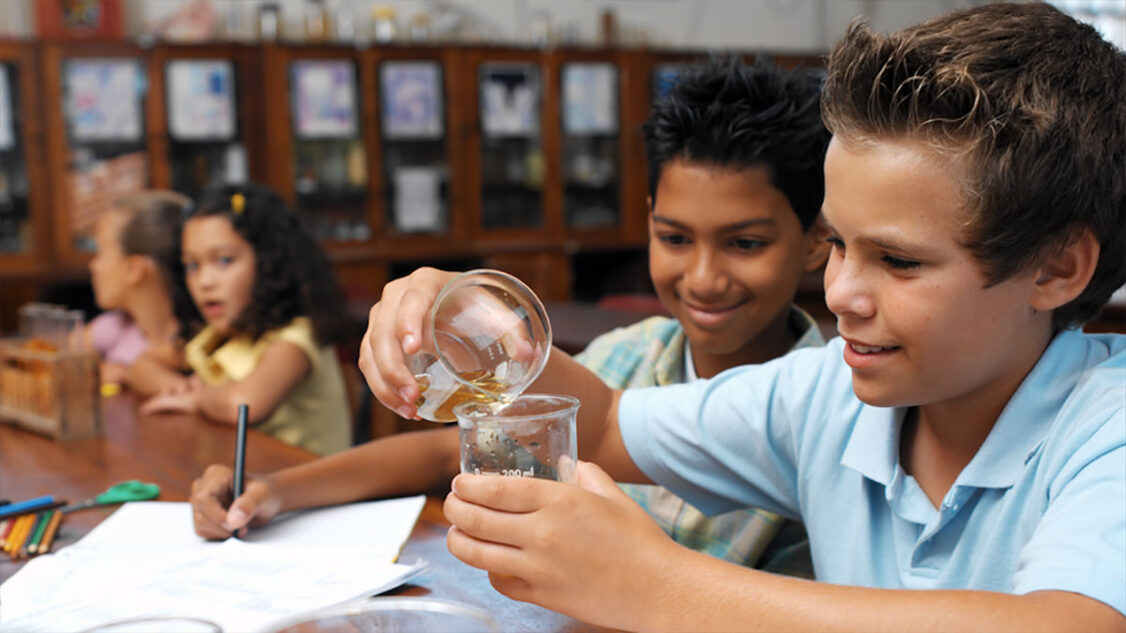
An experiment translates a complex topic from abstract concepts into the realm of observable experience. Pupils see the phenomenon firsthand and can influence it. New material is no longer perceived as a set of unfamiliar formulations.
Visible Phenomena Make Abstract Ideas Less Intimidating
Many school topics are difficult to grasp because pupils cannot visualize the process. Air pressure seems like a strange idea until you see an empty plastic bottle shrink as the temperature changes. Molecular motion remains invisible until the dye slowly disperses in water. First comes observation, then a question, then an explanation. This sequence is particularly useful for children who find it difficult to grasp material through text-based content or a spoken lecture. They are not being given a simplified version of science; they are being offered a clearer route into it.
Mistakes Become Part of the Learning Process
In a conventional theoretical model, a mistake often looks like a failure: first a wrong answer, then a correction in red ink and finally a lower mark in the class register. In hands-on learning, a mistake can become a topic for discussion. Why did the bridge made of sticks break? Why did the solution not change color?
This format encourages pupils to look for causes rather than guess the correct answer. This is particularly important in the natural sciences, where the result is valuable in any case. Sometimes a failed experiment shows that a student has overlooked a variable, measured the volume incorrectly, or jumped to conclusions too quickly.
The Teacher’s Role: Guiding the Thinking Process
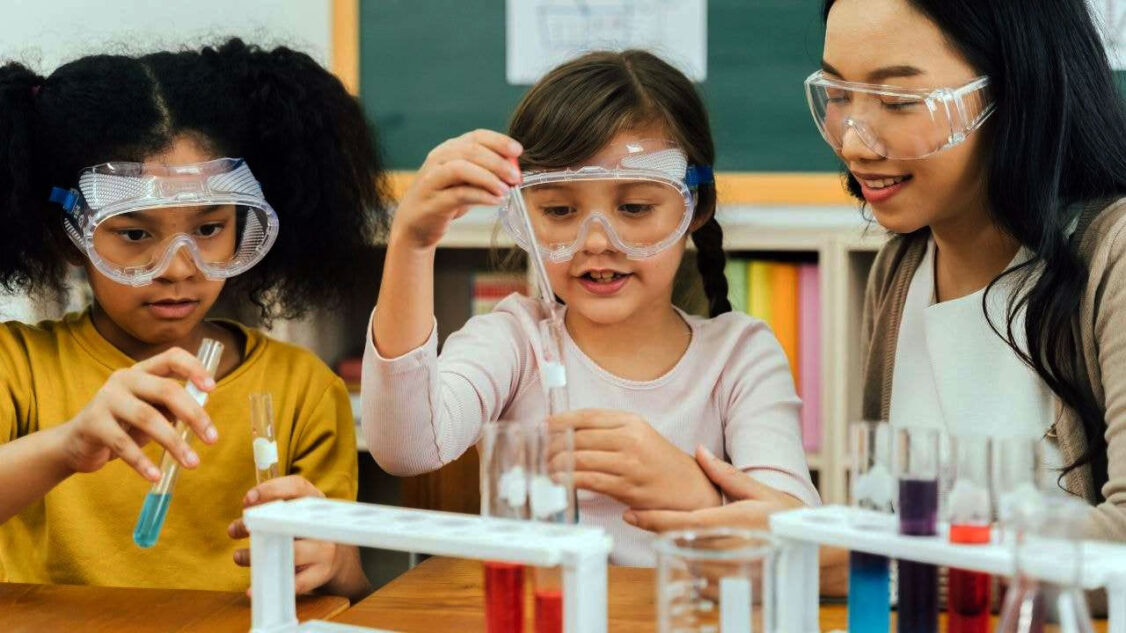
An interactive lesson requires greater preparation from the teacher. It is necessary to plan not only the materials but also the sequence of questions. The teacher must understand precisely when to give freedom, when to stop the group and when to refocus attention on the learning objective. A practical lesson is usually built around several elements:
- a clear learning objective;
- a brief theoretical introduction before starting work;
- students’ predictions before the experiment;
- observation and recording of results;
- discussion of causes, not only the correct answer;
- connection to the topic and a real-life situation.
This approach helps to avoid the main pitfall: interactivity for the sake of activity. Pupils may move noisily around the classroom, engaging in various activities, but learn almost nothing. Practical learning is effective when it establishes a link between action and thinking.
Interactive Lessons and Accessibility of Education
Practical learning fits well with the idea of accessible education, as it offers different ways to engage with the subject. One pupil understands better through a diagram, another through discussion, while a third needs repeated observation. This is particularly important for inclusive groups. A child who finds it difficult to read a long text may excel at building a model. A pupil who fears making mistakes in written work can formulate a hypothesis orally and test it together with classmates.
Laboratory investigations give pupils the opportunity to interact directly with natural phenomena, data, tools and materials. At the same time, ensuring safety remains the professional responsibility of the teacher and the school. Accessibility does not mean improvising without rules. The more active the lesson, the clearer the instructions, roles and boundaries must be.
Why Discussion After the Experiment Is More Important Than the Experiment Itself
The weakest form of a practical lesson is one in which the experiment is carried out, the class is amazed, and the teacher quickly moves on to the next topic. The impressions remain, but the outcome may be superficial. After the experiment, pupils should describe what they observed, compare it with the hypothesis and link the result to the concept. A metacognitive approach is helpful here. It is beneficial for pupils to learn to plan, monitor and evaluate their own learning. In practice, this might look like this:
- What did we expect?
- What data did we obtain?
- What would we change in a second attempt?
- What conclusion can be applied to new tasks?
Pupils master not only the topic but also ways of thinking. They test assumptions, observe conditions, acknowledge shortcomings and refine their conclusions.
Limitations: Hands-On Learning Does Not Work Automatically
It would be a mistake to claim that any experience is useful. Laboratory work can be tedious if pupils mechanically follow instructions without understanding. Group sessions can reinforce inequality if one pupil does all the work while the others simply watch.
Laboratory workshops have long been considered part of science education, but their contribution needs to be carefully analyzed. Hands-on learning is beneficial when delivered by enthusiastic teachers using clear methodologies.
Does Hands-On Learning Require a Large Budget?
By no means does every experiment require expensive equipment. Models of light and heavy structures can be made from paper, and the concept of filtration can be demonstrated using sand, water and fabric. A hands-on approach can even be used in humanities subjects. The cost of materials is not that important. Pupils must understand what they are testing and why.
An experiment or interactive task does not replace the teacher’s explanation, but it gives pupils a reason to think for themselves. When a lesson is well structured, pupils can more easily connect new material with the real world.